Translation vs Localization for Social Media: What's the Difference & Why It Matters
You're ready to expand your brand globally. You've translated your social media posts into Spanish, French, and Japanese. But the engagement? Crickling silence. Here's the truth: translation gets your words across, but localization gets your message across — and there's a massive difference.
If you're building in public, launching internationally, or managing campaigns for diverse audiences, understanding this distinction isn't optional anymore. It's the difference between spinning your wheels and actually connecting with new markets. Let's break down exactly what separates translation from localization, why it matters for your bottom line, and how to do it right.
Translation vs Localization: The Core Difference
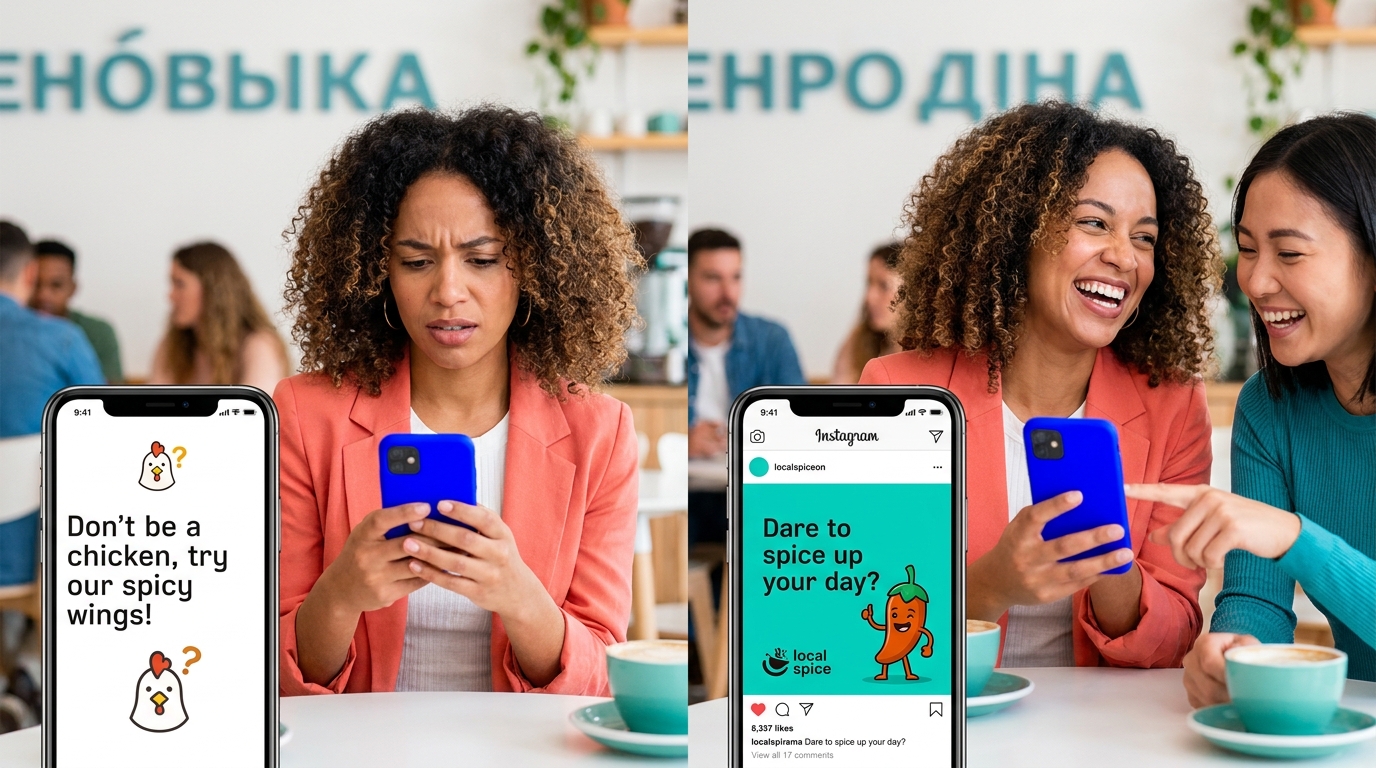
Translation is word-for-word conversion from one language to another. It's mechanical, literal, and focuses purely on linguistic accuracy. Think Google Translate on autopilot.
Localization adapts your content to resonate culturally, contextually, and emotionally with a specific audience. It considers local customs, humor, visual preferences, platforms, and even posting times. It's not just "what you say" — it's "how it lands."
Here's a simple example: A U.S. brand posting "Black Friday Sale! 🦃" might translate perfectly into French. But French audiences don't celebrate Thanksgiving, and Black Friday has different cultural weight there. A localized version? "Ventes Privées — Jusqu'à -50% ✨" taps into France's love of exclusive sales events.
What Translation Covers
- Converting text from Language A to Language B
- Maintaining grammatical accuracy
- Preserving literal meaning
What Localization Includes
- Cultural adaptation (holidays, values, taboos)
- Platform preferences (WeChat in China vs Instagram in Brazil)
- Visual adjustments (colors, imagery that resonate locally)
- Tone and humor calibration
- Local influencer partnerships and references
- Time zone-optimized posting schedules
- Currency, measurements, date formats
Translation gets you understood. Localization gets you liked, trusted, and followed.
Real Impact: Case Studies That Prove the ROI
Let's look at brands that nailed localization versus those that face-planted with mere translation.
Netflix: Localization Masters
Netflix doesn't just subtitle their shows — they create region-specific social content. When promoting "Squid Game" in Latin America, they didn't use direct translations of U.S. posts. Instead, they leveraged local meme formats, partnered with regional creators, and referenced culturally relevant childhood games. Result? 95% brand awareness in key markets within months, with localized content driving 3x higher engagement than translated posts.
Coca-Cola's "Share a Coke" Campaign
When Coca-Cola brought "Share a Coke" to China, they didn't just translate names onto bottles. They used nicknames and terms of endearment specific to Chinese culture — "close friend," "classmate," "goddess." On social media, they encouraged sharing moments with these personalized bottles using local platforms like Weibo. The campaign generated 6 million social media followers and increased sales by 20% in that market.
The Cautionary Tale: KFC in China
Early KFC translations in China famously rendered "finger-lickin' good" as "eat your fingers off" — a literal disaster. After pivoting to true localization, adapting menus to local tastes and creating China-specific social campaigns celebrating Lunar New Year and regional festivals, KFC became one of the most successful Western brands in China.
The data is clear: brands investing in localization see 2.5x higher conversion rates and 40% better engagement compared to translation-only approaches, according to a 2023 CSA Research study.
Your Step-by-Step Localization Strategy for Social Media
Ready to go beyond translation? Here's your actionable framework for creating localized social content that actually converts.
Step 1: Research Your Target Market's Social Behavior
Before writing a single post, understand where and how your audience consumes content:
- Platform preferences: Instagram dominates in Brazil, but LINE rules in Japan
- Content types: Germans prefer detailed, informative posts; Brazilians engage more with playful, visual content
- Posting times: When is your specific audience scrolling? (Hint: not the same as your home market)
- Local holidays and events: Build a cultural calendar for each market
Step 2: Adapt Your Core Message, Not Just Words
Take your central brand message and ask: "How would someone from this culture express this idea?" Work with native speakers who understand social media trends, not just linguists.
For example, if your U.S. post emphasizes "crushing goals" and "hustling," a Japanese localization might focus on "achieving harmony" and "continuous improvement" — same outcome, culturally appropriate framing.
Step 3: Customize Visual Elements
Colors carry different meanings across cultures. White symbolizes purity in Western contexts but mourning in some Asian cultures. Red signals danger in the West but luck and prosperity in China.
Review every image, emoji, and graphic through a local lens. That thumbs-up emoji? Offensive in parts of the Middle East. The OK hand sign? Problematic in Brazil.
Step 4: Leverage Local Trends and References
Generic global content performs 60% worse than locally-relevant posts. Monitor trending hashtags, memes, and conversations in each market. Reference local celebrities, events, and cultural moments your audience cares about.
A beauty brand shouldn't post the same makeup tutorial worldwide — Korean audiences want glass skin techniques, while Brazilian followers engage more with vibrant carnival-inspired looks.
Step 5: Test and Iterate with Local Feedback
Launch small, measure religiously, adjust quickly. Track:
- Engagement rates by market
- Sentiment analysis in local languages
- Click-through rates on localized CTAs
- Follower growth in each region
- Conversion rates from social to purchase
The best localization strategies evolve based on real audience response, not assumptions.
The Infrastructure Challenge: Scaling Localized Content
Here's where most builders hit a wall. You now understand that you need localized content for each market — but creating it feels impossible. You're looking at:
- 5+ different platform strategies
- Multiple languages and cultural adaptations
- Different posting schedules for each time zone
- Constant monitoring of local trends
- Native-level content creation for every market
Hiring a team for each market? Unrealistic for most solo builders and small teams. Agencies charge $3K-10K monthly per market. DIY means your entire week disappears into social media management.
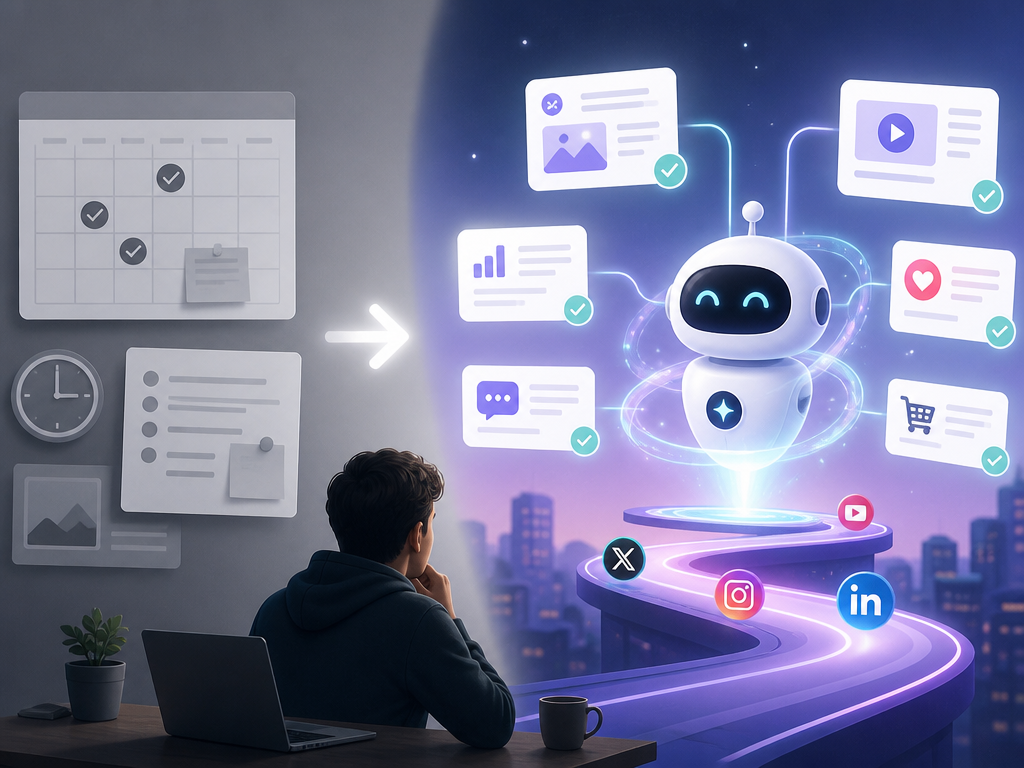
This is exactly why we built Agent Mio — AI agents that don't just translate, but actually localize your content across markets and platforms. You set your brand voice and target markets once, and AI agents draft culturally-adapted posts that maintain your message while resonating locally. You review and approve (because you're still in control), then it ships across all channels automatically.
Instead of juggling translation tools, cultural consultants, and scheduling platforms, you get one system that handles the entire localization workflow. The AI learns from engagement data across markets, helping you refine what works in Tokyo versus what lands in São Paulo.
Your Localization ROI: What to Expect
When you shift from translation to proper localization, typical results include:
- 40-60% increase in engagement within the first quarter
- 2-3x higher conversion rates from social to sign-up/purchase
- 25-35% faster follower growth in new markets
- Reduced ad spend — organic reach improves when content resonates culturally
- Better brand sentiment scores — you're seen as "getting" the local audience
One Agent Mio user expanding from the U.S. to Spanish-speaking markets saw their Latin American engagement jump 156% after switching from translated to localized content — while spending 70% less time on content creation overall.
Start Localizing (Without the Overhead)
The gap between translation and localization is the gap between being heard and being valued. Global expansion doesn't require a global team anymore — it requires smart infrastructure that scales your voice across cultures without losing what makes your brand unique.
Your content should sound like it was created by someone who lives in each market, thinks in their language, and understands their world. That's not about word-for-word translation — it's about message-for-message adaptation.
Ready to expand globally without the chaos? Try Agent Mio free and let AI agents handle localization while you focus on building your product. Save 10+ hours weekly, reach new markets authentically, and grow without the traditional overhead.
#AgentMio #AIContentCreation #SocialMediaManagement #ContentLocalization #GlobalMarketing #AIAutomation #SoloBuilder #GrowthHacking