AI Marketing Agents: Why Solo Builders Are Moving Past Scheduling Tools in 2026
Discover how autonomous AI marketing agents are transforming solo builder workflows in 2026. Learn why scheduling tools are becoming obsolete and how AI agents plan, create, and optimize content independently.

By AgentMio team Published · Updated · 6 min read
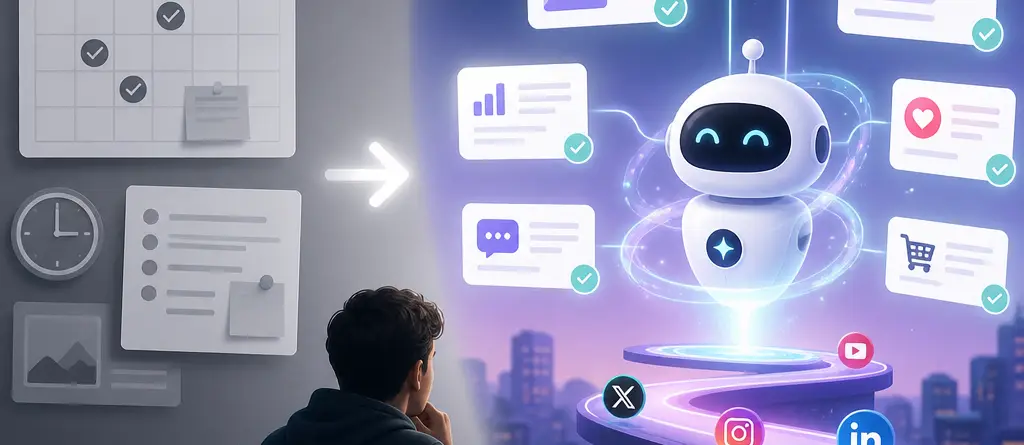
AI marketing agents are software systems that plan, draft, publish, and optimize social media content with minimal human input — a step beyond scheduling tools that only queue posts you've already written. In 2026, solo builders are shifting toward these autonomous systems because they cut hands-on time while still keeping a human in control of what actually ships. This shift marks the next phase of social media AI tools, moving from "helpful calendar" to "working teammate."
What Comes After the Scheduling Tool Era?
The scheduling tool era was built on a simple promise: write your posts once, queue them across platforms, and stop copy-pasting into five different apps. That model worked well for years, but it still required you to do all the thinking — the strategy, the captions, the hashtags, the timing.
What comes next is a layer of autonomy on top of that queue. Instead of just holding your content, the system helps generate it, adjusts it per platform, and learns from what performs. This is the practical meaning of "the future of social media management" that founders keep asking about: less manual assembly, more delegated execution with your approval built in.
What Are AI Marketing Agents, Exactly?
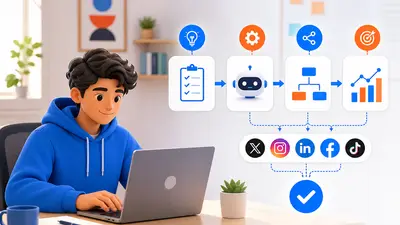
An AI marketing agent is a system that can complete a multi-step marketing task — like planning a week of posts, writing drafts in your brand voice, and adjusting timing based on engagement — without you manually doing each step yourself. The word "agent" matters here: unlike a static AI writing tool that only responds to one prompt at a time, an agent chains steps together toward a goal.
For a solo builder, this looks like telling the system your goal ("grow my SaaS waitlist" or "promote this feature launch"), and having it propose a content plan, generate drafts across platforms, and flag what's ready to publish. You still review and approve. The agent just removes the blank-page problem and the manual scheduling grind.
How Is This Different From a Chatbot Writing Captions?
A chatbot writes text when you ask it to. An agent plans, drafts, formats for each platform, and can act on a schedule or trigger — all as one connected workflow rather than isolated prompts.
The distinction matters for solo builders because chatbot-only workflows still require you to be the project manager: copying output, reformatting for Instagram versus LinkedIn versus X, and manually hitting publish. Agent-based tools absorb that coordination work.
Why Is Autonomous Social Media AI Gaining Traction Now?
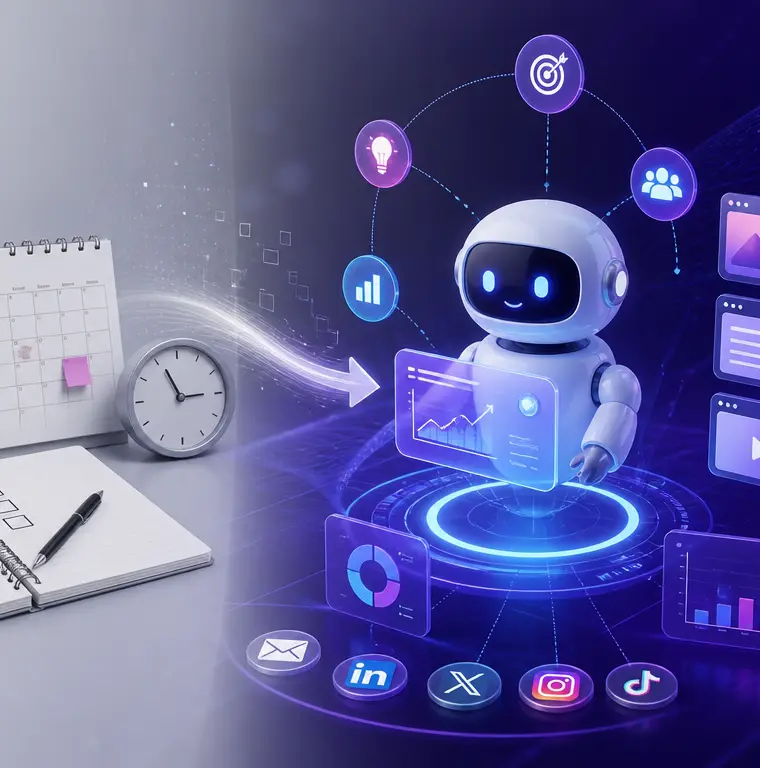
Autonomous social media AI is gaining traction in 2026 because solo builders and small teams are managing more channels, more languages, and more brands than ever, without adding headcount. Doing that manually — even with a good scheduler — still means constant context-switching between platforms and campaigns.
Three forces are driving the shift:
- More platforms to maintain: Founders now routinely post across four or five networks, each with different formats and audience expectations.
- Content volume expectations: Consistent posting is table stakes for visibility, which means more drafts, more variations, more testing.
- Global audiences from day one: Many solo products serve international users, so multilingual content isn't optional anymore — it's part of go-to-market.
This is exactly the gap autonomous tools are built to close: doing the repetitive planning and drafting work so a single person can maintain a presence that used to require a small team.
How Do You Keep a Human Voice When Using AI in Marketing?
You keep a human voice by treating AI in marketing 2026 as a drafting and execution layer, not a replacement for your judgment — you set the brand voice, review drafts, and approve before anything goes live. The agent handles repetition; you handle taste.
Practical ways to protect your voice:
- Feed it real examples: Give the system your best-performing past posts so it learns your tone, not a generic one.
- Keep an approval step: Never fully auto-publish without a review pass, especially early on.
- Correct and re-train regularly: Treat edits as feedback the system should learn from over time.
- Reserve certain topics for manual writing: Sensitive announcements or personal stories often deserve a fully human first draft.
How Do AI Marketing Agents Actually Plan and Optimize Content?
AI marketing agents typically work in three connected stages: planning, creation, and optimization. Understanding each stage helps you evaluate whether a tool is truly autonomous or just automated scheduling with extra branding.
1. Planning
The agent looks at your goals, past content, and posting cadence to propose a content calendar — what to post, on which platform, and when. This replaces the manual brainstorming session with a starting draft you can adjust.
2. Creation
Drafts get generated in formats suited to each platform: shorter and punchier for X, more visual-first for Instagram, more professional for LinkedIn. Multilingual creation means the same core message can go out in multiple languages without a separate translation step.
3. Optimization
Once content is live, the agent tracks what's performing and feeds that back into future planning — favoring formats, times, or topics that get better engagement. Over weeks, this creates a feedback loop that a manual process rarely has time for.
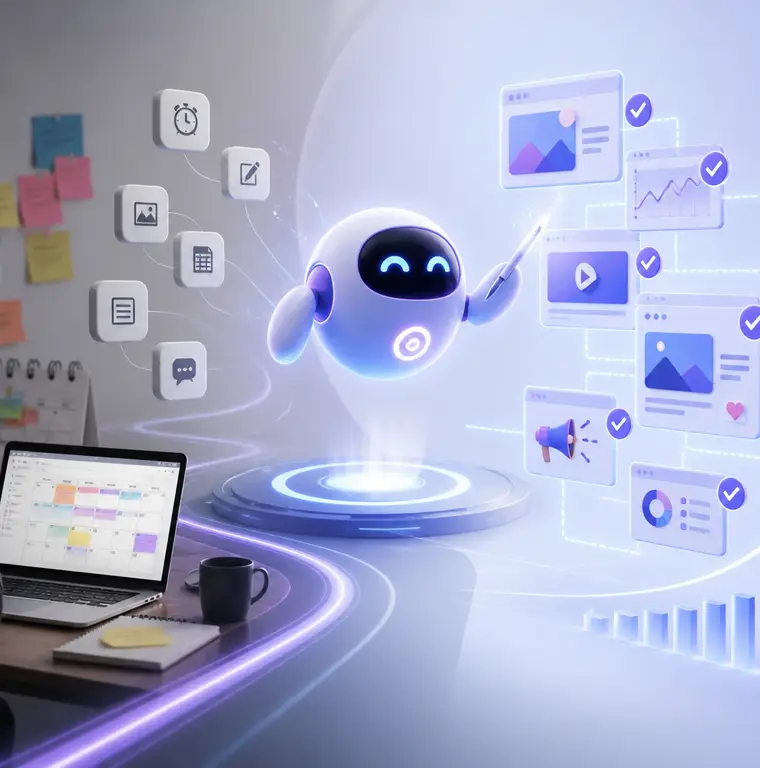
Where Does Agent Mio Fit in This Shift?
Agent Mio is an AI-powered social media management platform designed for solo builders and small teams to manage their social media presence across multiple platforms, languages, and brands from one centralized location. It's built specifically for the autonomous-agent model described above, rather than as a scheduling tool with AI features bolted on.
In practice, that means Agent Mio's AI agents can handle the drafting and cross-platform formatting work, while you keep final approval before anything ships. For a founder juggling a product launch, a personal brand, and maybe a client account too, that's the difference between spending evenings writing captions and spending minutes reviewing them.
The multi-brand and multi-language capability also matters here: instead of running separate tools or spreadsheets for each brand or region, everything lives in one dashboard. That's a direct answer to the "future of social media management" question — fewer tools, more centralized control, less manual duplication.
How Do You Start Moving Toward an Agent-Based Workflow?
You start by auditing where your time actually goes each week — planning, drafting, formatting, publishing, or analyzing — and picking the one step costing you the most hours to hand off first.
- Audit your current process: Track a week of your social media tasks and note where the manual bottlenecks are.
- Centralize your accounts: Bring all platforms into one dashboard before adding automation, so you're not managing chaos plus AI.
- Let AI draft, you approve: Start with content generation and formatting, keeping human review in place.
- Expand gradually: Once you trust the drafts, extend automation to scheduling and performance-based optimization.
- Review monthly: Check what the agent is learning and correct drift in tone or topic selection early.
FAQ
What is the difference between social media automation and AI marketing agents?
Social media automation typically refers to scheduling tools that publish pre-written content at set times. AI marketing agents go further by planning, drafting, and adjusting content themselves, with a human approving before publishing rather than writing every post from scratch.
Are AI marketing agents only useful for large marketing teams?
No — solo builders and small teams often benefit the most, since they don't have extra staff to absorb repetitive planning and drafting work. AI agents let one person maintain a multi-platform, multi-language presence that would otherwise require a small team.
Will AI-generated social media content sound generic?
It can if the system isn't given examples of your existing voice and isn't reviewed before publishing. Feeding it real past content and keeping an approval step in place is the most reliable way to keep posts sounding like you.
How does multilingual AI content creation actually work?
The AI agent generates a core message and adapts it into multiple languages while trying to preserve tone and intent, rather than performing a literal word-for-word translation. This lets a single founder reach international audiences without hiring separate translators for each market.
Is it expensive to start using AI social media tools?
Not necessarily — many platforms, including Agent Mio, offer a free plan with pay-as-you-go options, so solo builders can test AI-assisted workflows before committing to a paid tier like the Starter or Pro plans.
Ready to move from manual scheduling to AI-assisted social media management? Try Agent Mio and see how AI agents can plan, draft, and publish across every platform, language, and brand you manage — from one place.